






The house is only part of the decision
By Ed Kaminsky | Rocket Bay | Builder Series, Part 1
You want a brand-new home in Southern California. You have the budget. You know what you like. There's just one problem: you can't find it.
That is where the Rocket Bay conversation can take a turn. As more wealth comes into the South Bay and buyers compete for a limited selection, some will decide to create the home they want rather than wait for it to appear.
But wanting a new home and wanting a building project are two very different things.
I've built all three homes I've lived in in Manhattan Beach. I've also put together collaborations with local developers involving more than $100 million in local real estate in the past couple of years. I've seen this from the homeowner's side and the transaction side.
There are three main choices: buy a completed spec home, buy an older house and run your own custom-home project, or get involved with a developer before the home is finished. Each can produce a beautiful home. The money, time, decisions and stress along the way can be very different.
Before you buy the old house and start imagining the new one, decide which process you actually want.
1. Buy a completed spec home
Spec is short for speculative. A builder-developer buys a property, builds a new home and offers it for sale, hoping to make a profit. Around here, that usually means buying an older house and tearing it down. You're often buying an existing property for what can replace it.
The developer takes on the project before knowing who the eventual buyer will be. Some projects make good money. Others break even or lose money. A profit is the goal, not a guarantee.
For the buyer, the attraction is straightforward: the home is there. You can walk through it. You can stand in the kitchen and decide whether you like it. You can see where the windows are, how the rooms connect and what the finishes actually look like. You can have the home inspected and bring in professionals to help you evaluate it.
Some people can look at plans and picture the finished home. Others can't. There is nothing wrong with wanting to see what you're buying before committing millions of dollars.
This path makes sense for someone who wants to move sooner and doesn't want another major responsibility. They don't want years of meetings. They don't want to spend their weekends comparing tile. They want a home.
You do give up control. The developer has already chosen the layout, structure and most of the finishes. If you love almost everything but want to change a major feature, price that change before deciding the house is a bargain.
In my experience, buying a completed home can be the more economical choice versus building your own custom home.
An experienced spec builder is making choices with the eventual sale in mind. Where does it make sense to spend? What will buyers notice and pay for? Where can the design stay beautiful without making the structure unnecessarily complicated?
The custom buyer is often asking a different question: which one do I like best?
Ask that question a thousand times, choose the upgrade every time, and you begin to understand why paying a developer's profit does not automatically make the completed home the more expensive choice.
2. Buy the teardown and build your own custom home
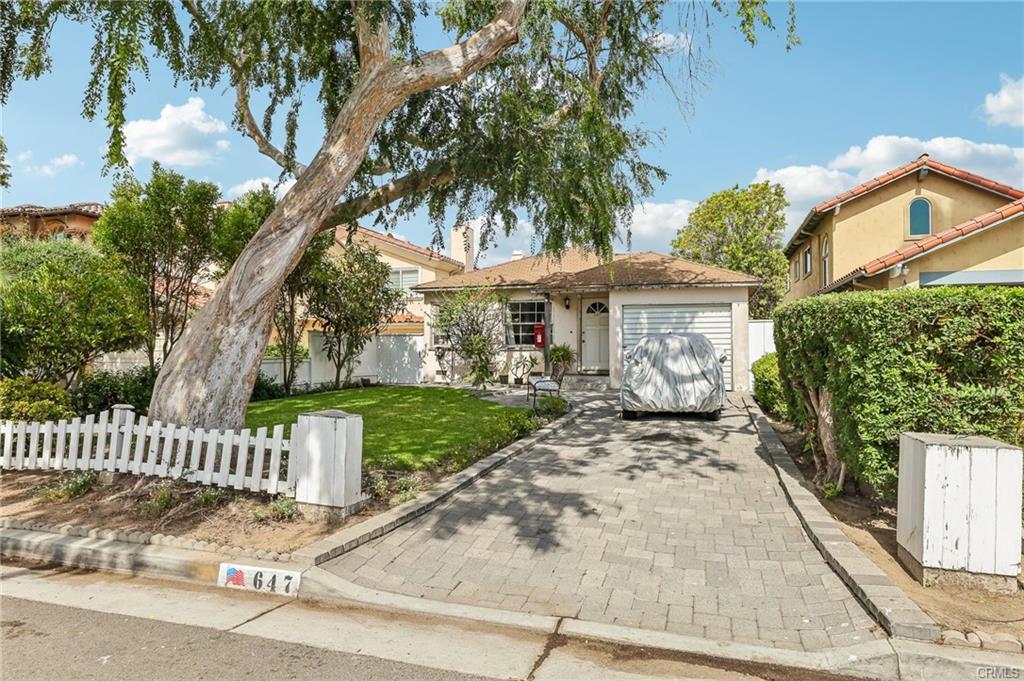
This is the path with the most control. Find the property. Hire the architect. Hire the designer. Hire the builder. Decide what you want and work with the team to create it.
You may have professionals managing the job, but that doesn't mean they can make every decision for you. Your input becomes part of the schedule.
Windows, doors, roofs, tile, hardware, appliances, cabinets, light fixtures. Then the details inside those decisions. Where does the bed go? Where should the switches go? How high should the countertop be? What happens when the cabinet opens?
Having built three homes for myself, I can tell you there are easily a thousand decisions. Some are fun. Some stop being fun the third time you have to revisit them.
And they don't conveniently arrive after you've finished your regular job.
The timeline is part of the purchase
When I built my first home in 1999, we had the plans designed and approved in under four months. That is my own experience from that project, not a timetable I would hand a buyer today.
Based on the projects I've seen, I would plan around two to three years for the full custom-home process today, with some projects taking longer. A project in the Sand Section or on the Strand can need more time, depending on the property and approvals. Get a property-specific schedule from the people who will actually handle the work.
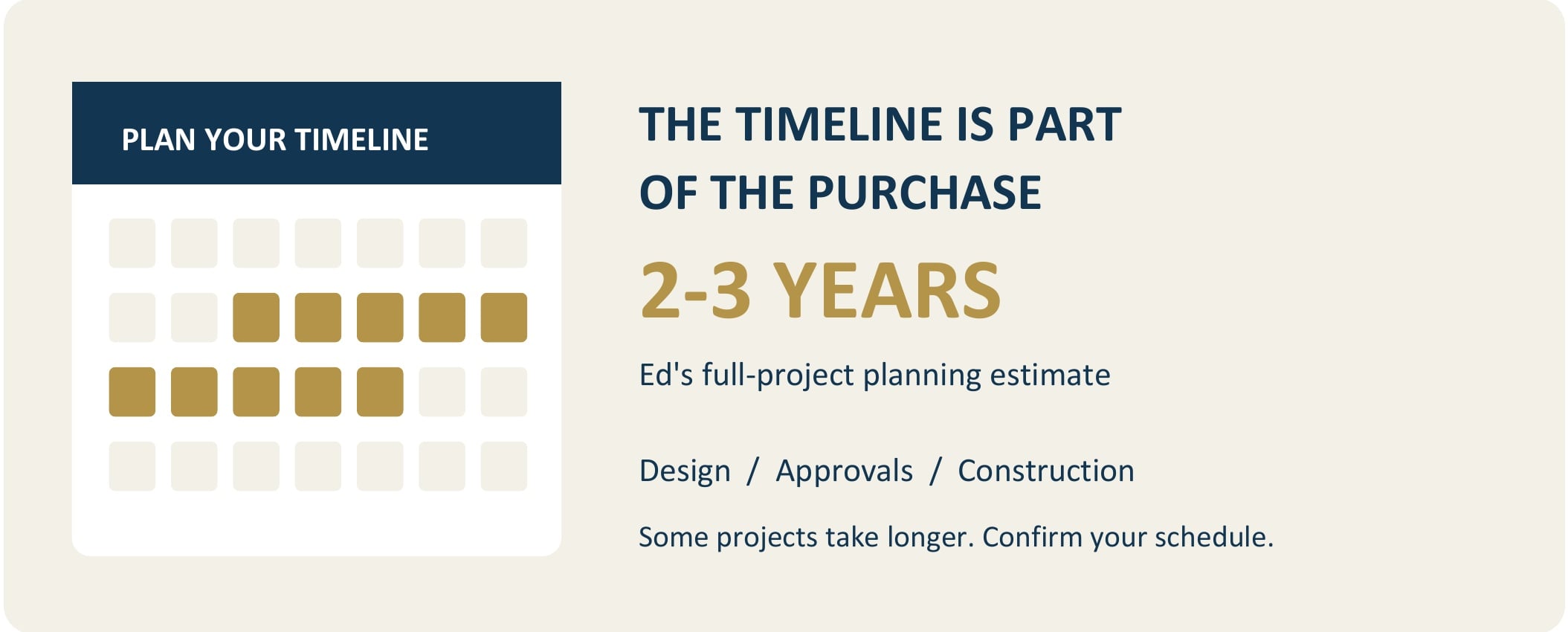
An experienced team may find ways to move more efficiently. That still doesn't make the schedule a promise. Design, review, corrections, construction and changes all take time.
One of the most frustrating parts is going back and forth over corrections. I've seen an issue come back through several rounds, leaving everyone asking why it wasn't raised earlier. You want the house built correctly and safely. You also want to know when you can move in. Living between those two realities takes patience.
The building quote isn't your whole budget
Someone tells you a home can be built for a certain amount per square foot. Before getting excited, ask what that number includes.
Does it include the architect? The designer? Engineering and other soft costs? Financing and carrying costs? What about living somewhere else while the home is being built?
Then think about your own time. If this project takes you away from your business or career, that has a cost too, even if it never appears on the builder's invoice.
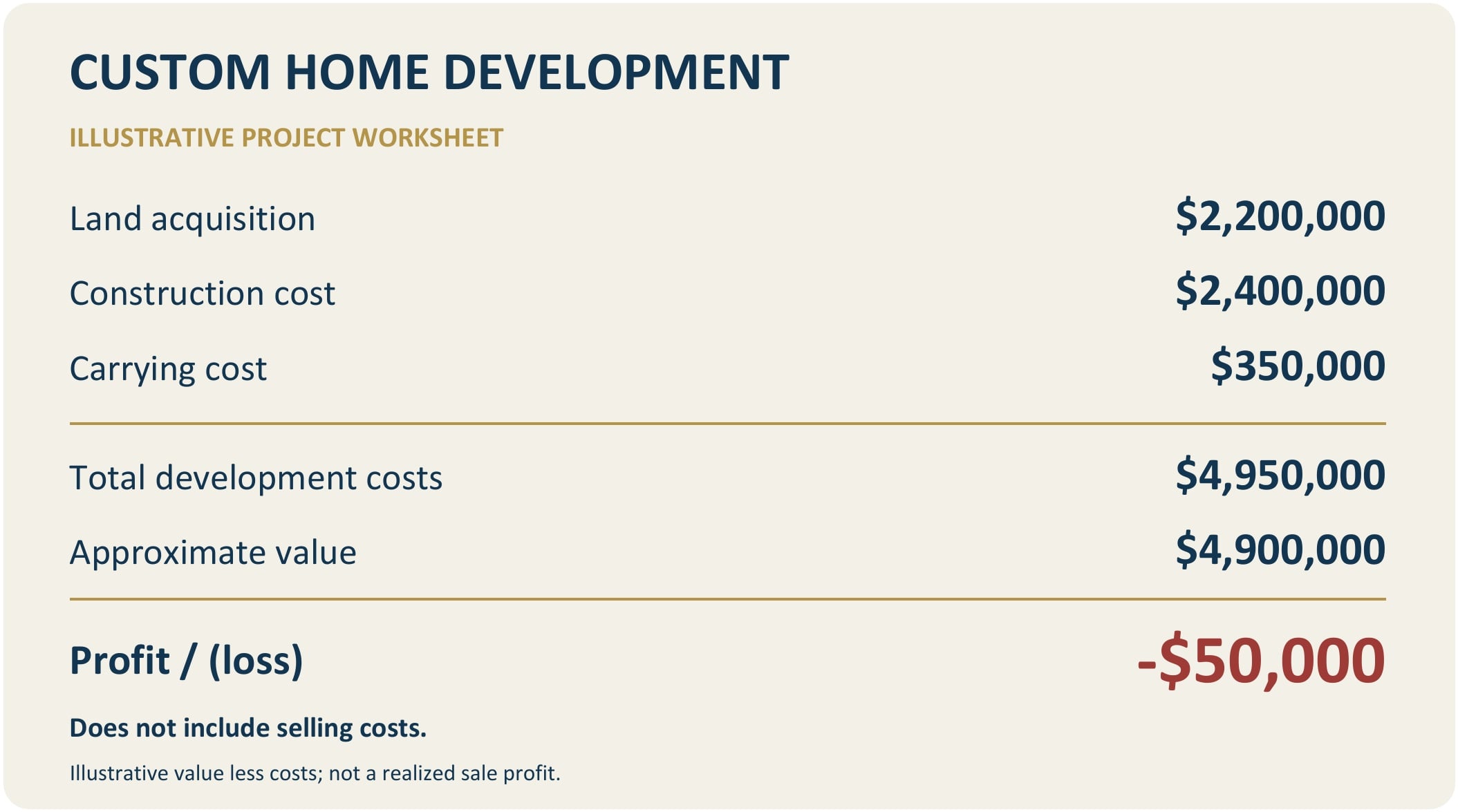
I'm going to spend more time on the full calculation in the next article. For now, don't compare a construction quote with the price of a completed home and assume you're comparing the same thing.
The little upgrades don't stay little
Here's how the budget begins to move.
You see a window you like better. It costs a few hundred dollars more than the one allowed in the budget. On a multimillion-dollar home, that doesn't sound like much.
But you aren't buying one window.
Then you do it with the light fixtures. Then the cabinets. Then the appliances. Each decision sounds reasonable when you look at it by itself. The total is what gets you.
As an illustration, suppose the allowance for a group of selections was $50,000 and the choices come back at $90,000. That's another $40,000. Repeat that kind of decision across several categories and you have a very different project. Those are example numbers, not a current quote for windows or any particular home.
You're looking at one choice. Your budget is paying for all of them.
Structural choices can matter just as much. A room extending over a garage or a dramatic covered patio may need a more expensive structural solution. Have the builder and engineer help price those ideas during design, before you fall in love with something you assumed was already in the budget.
Change orders are where the drawing meets real life
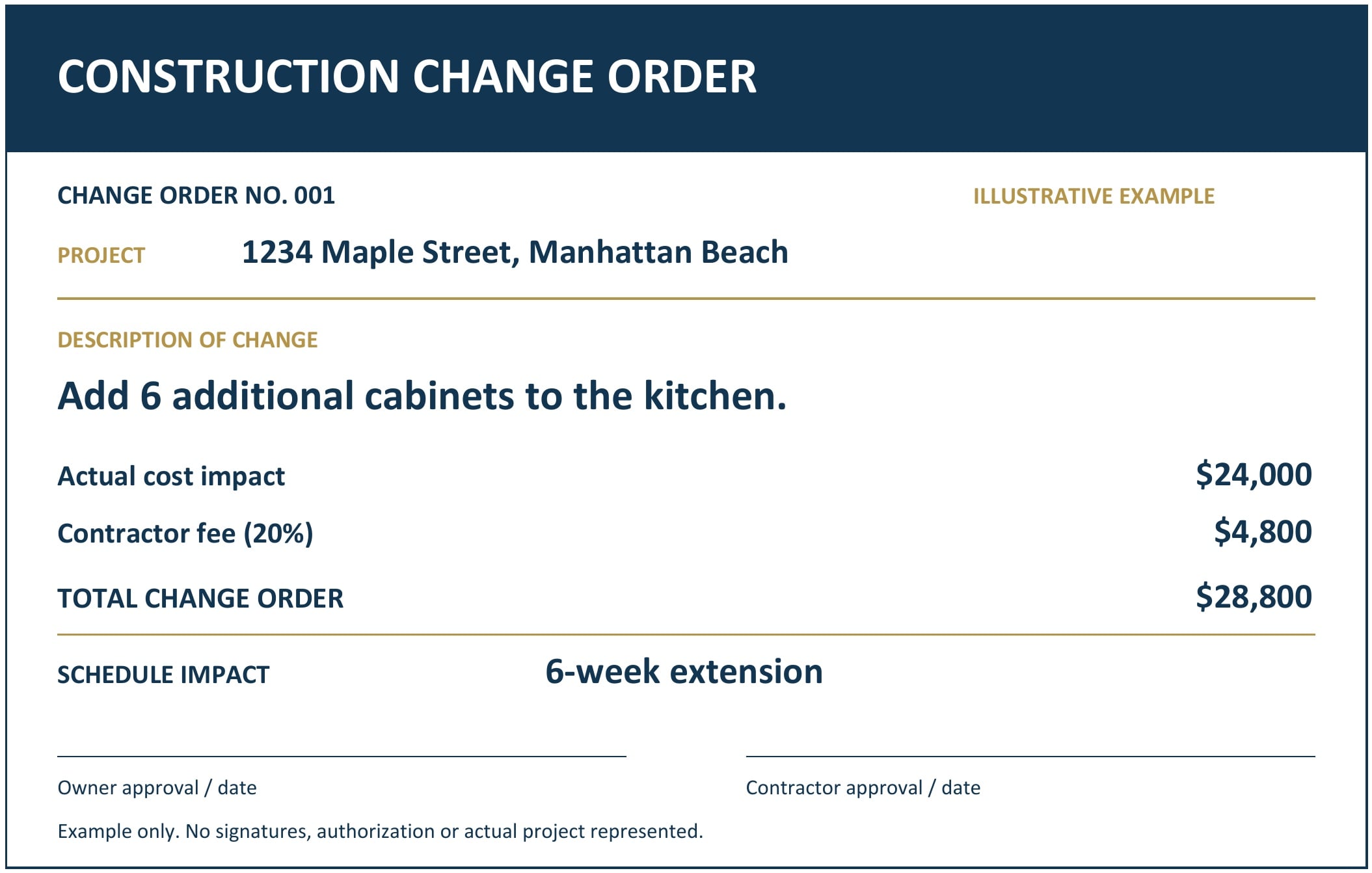
You walk through the framing and suddenly see something you couldn't picture on paper. You want the sink six inches to the left. You want a different window. You realize the wall where the bed belongs has switches in the wrong place.
Those are the kinds of changes that can trigger more work, more cost and more time. A small change in your mind may involve several trades on the job.
And while you're waiting for the house, you're still looking. Another showroom. Another magazine. Another countertop you like better.
I'm still looking for that custom-home client who tells me they stayed at or under the original budget. Raise your hand if it's you.
That is my experience talking, not a claim that every construction project must go over budget. It is why I want buyers to take allowances, change orders and a realistic contingency seriously from the beginning.
Spending more doesn't automatically create more value
"Even if building a custom home doesn't produce a profit on paper, you can still get exactly what you want and be happy with the decision. In my experience, most buyers who build for themselves are very content when the home delivers what they wanted. They're building a place to live, not a project to sell for a profit."
- Ed Kaminsky
The home may be exactly what you want. That has real personal value. But the next buyer may not pay you back for every choice.
Doubling what you spend does not mean doubling what the home is worth. Some upgrades make the house more appealing to a wide range of buyers. Others are very personal.
If every expensive choice came back dollar for dollar at resale, spec builders would make those choices too.
There is also no simple rule that building yourself eliminates the developer's margin. You are still paying someone to build the house. Depending on the agreement, there may be management fees, supervision, overhead and markups on changes. Spec developers also have costs. Compare the actual proposals and responsibilities, not a general assumption that one route avoids paying for expertise.
And be honest about the emotional side. Construction can test marriages, relationships and patience. The right architect, designer and builder can make an enormous difference. So can your ability to make decisions and stick with them.
Build because you want the control and can handle the process. Don't build on the assumption that it must be cheaper.
3. Buy into a developer's project before it is finished
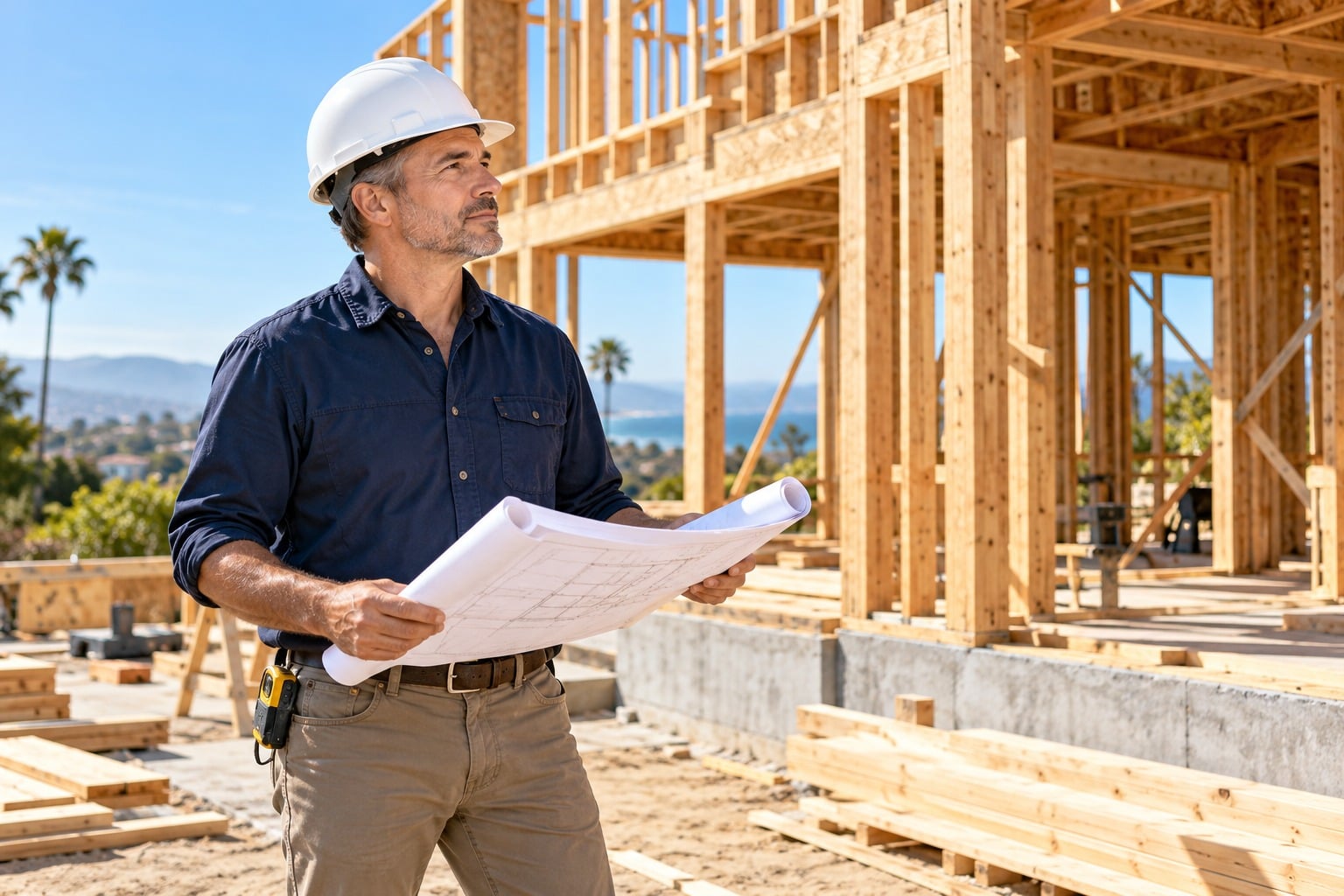
This is the middle ground many buyers don't know enough about.
You work with a developer who has acquired a property or is arranging its acquisition. You may get involved before the plans are finished, after plans have been submitted, or while the home is under construction.
Sometimes it is an early purchase of a home already being developed. Sometimes it is a more involved collaboration. Those arrangements are not all the same, and calling something a partnership doesn't tell you who owns what or who carries which obligations.
What they can have in common is a buyer who wants some input without taking on every day-to-day responsibility of creating the home.
How much can you change?
That depends on when you arrive and who you're working with.
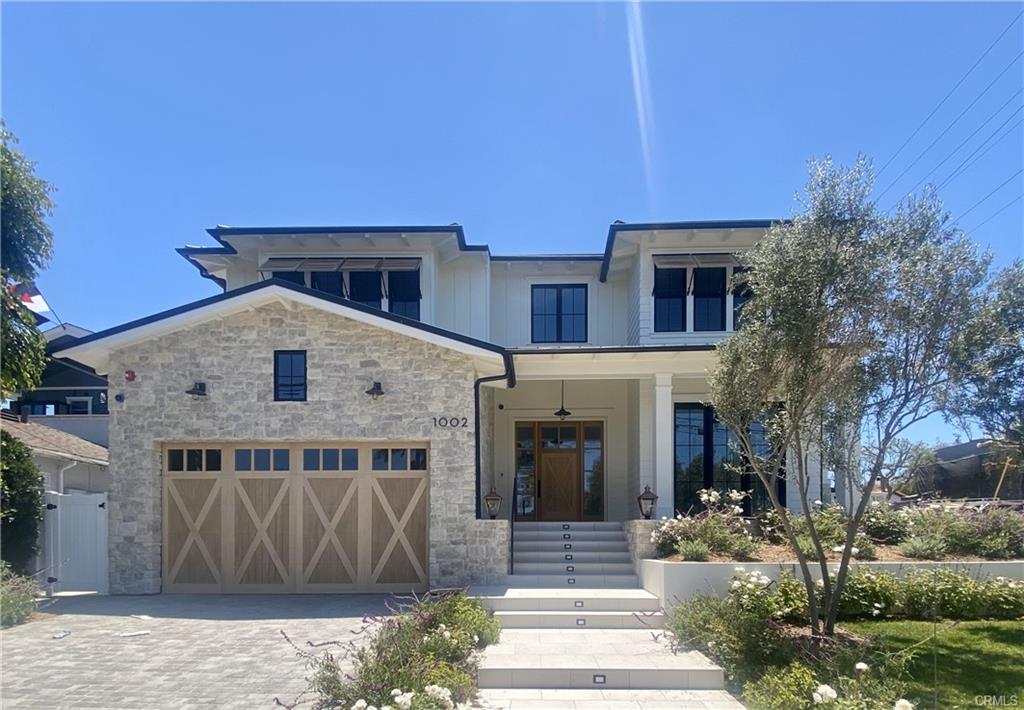
Some developers use set floor plans and allow choices through a design center. See below for an example of that type of home: the white house shown here.
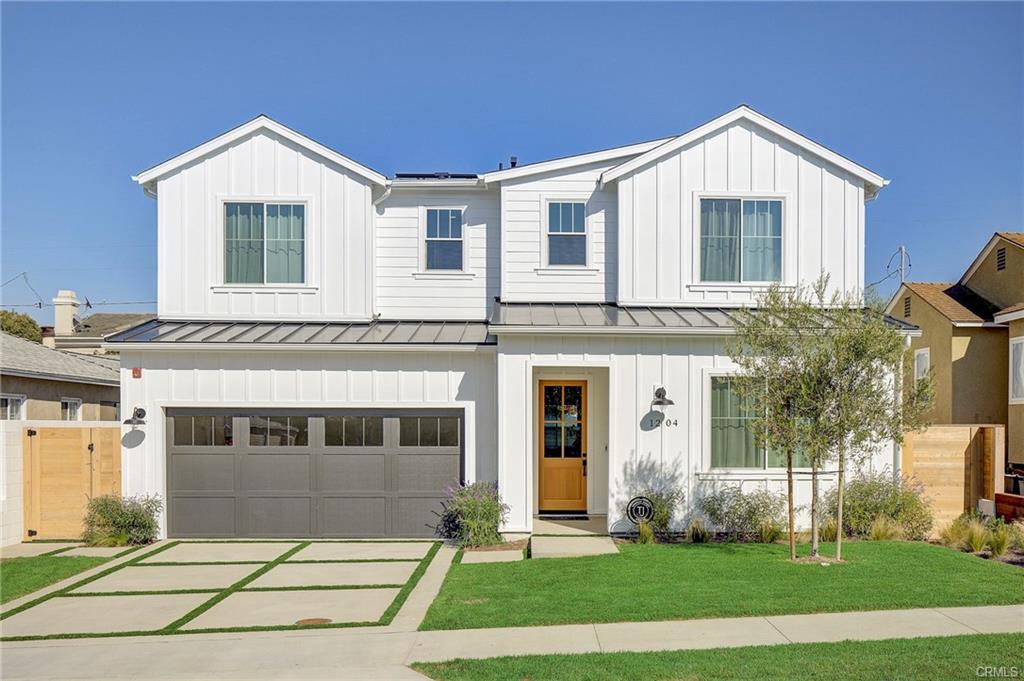
Others allow substantial changes. I've worked with a developer who is very good at sitting down early, walking buyers through the entire project and explaining what a change will mean for cost and time.
I'm leaving the developers' names out here. If you're considering this route, we can talk about which approach fits you and which opportunities are available at that time.
The later you get involved, the fewer practical choices you may have. Moving a room on a drawing is one thing. Moving it after the house is framed is another.
And early access does not automatically mean a discount. Any savings depend on the price, funding and terms of the particular arrangement.
Who handles the headaches?
This can be the biggest benefit.
In the collaborations I've helped arrange, the developer handles the city, subcontractors and daily construction management. The buyer makes the important choices early, works with the agreed team and stays involved without having to act as the developer.
I've seen buyers get their dream home and walk away without the usual collection of construction war stories. They spend time up front on the design, agree on the team and trust the process. Some have been able to check on progress two to three times a month rather than feel they need to be there three times a day.
That isn't a promise about every project. It is what a well-organized collaboration can look like. The experienced developer knows which questions need answers before construction starts and where a late change will create trouble.
The buyer still has decisions to make. The goal is to make them at the right time.
Get the arrangement clear before committing
Financing and ownership can be structured in different ways. In some arrangements, the buyer funds the property purchase and seeks construction financing. Others work differently. An experienced developer may help a lender evaluate the project, but loan approval and terms still depend on the borrower, project and lender.
Before committing, I want the buyer to understand the written specifications, the allowances for selections, the cost and approval process for upgrades, the expected schedule and what happens if it changes.
An allowance is a budget for an item or category. It is not a promise that whatever you select will fit inside it. Ask what is included and how an overage will be handled.
Have qualified legal counsel review the agreement, ownership structure, payments and responsibilities. Don't assume that a developer's involvement or insurance removes your own potential liability. Ask your attorney and insurance professionals to explain the actual arrangement and coverage.
For any of these three paths, seek advice from a qualified attorney about SB 800, California construction-defect law and warranties. Ask how they apply to your particular purchase or build, what responsibilities you have after completion, and what maintenance or documentation you need to keep. Those are questions for your legal advisers, not assumptions to make from an article.
Which route fits your life?
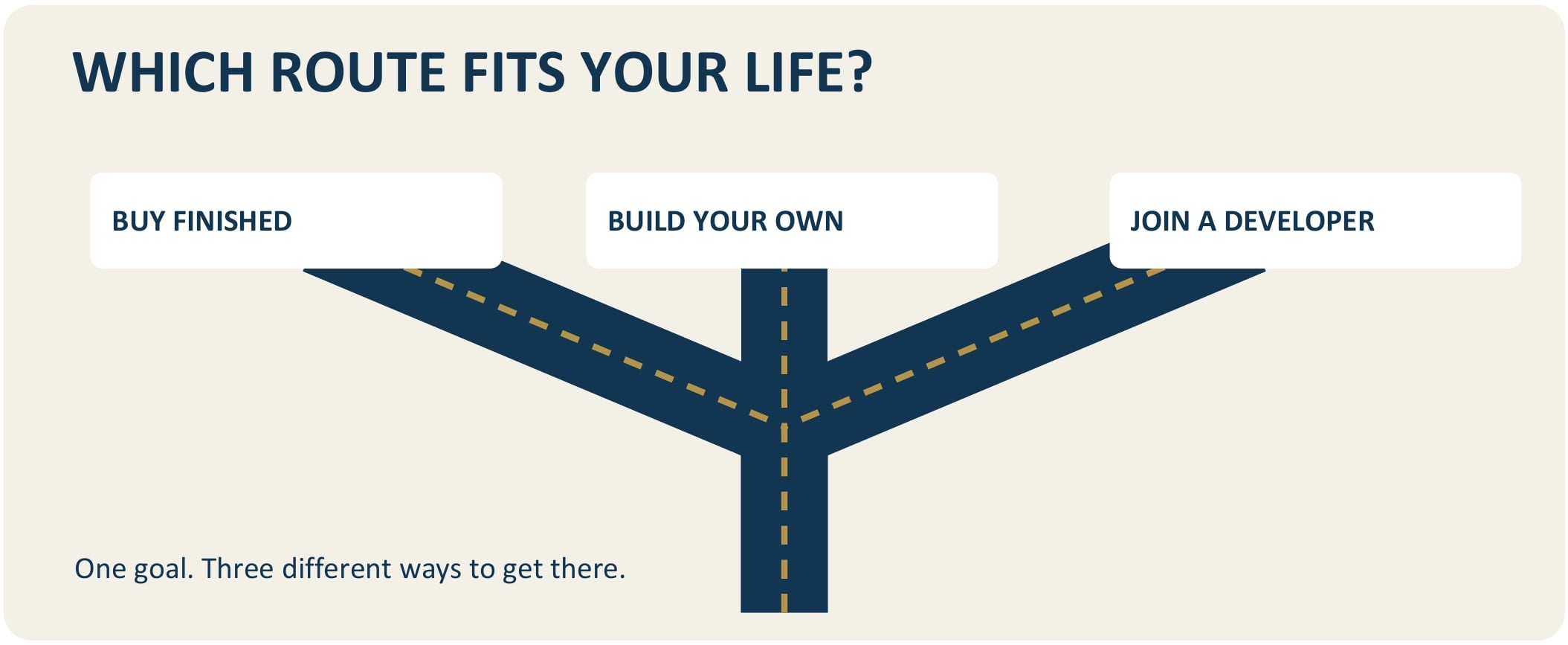
If you want to move sooner, need to see the finished product and don't want a construction project, start with completed homes.
If you want the most control and are prepared for the time, decisions and uncertainty, a custom build may be right for you.
If you can wait, want meaningful input and would rather have an experienced developer manage the daily work, explore an early-stage developer project. Be clear about how much customization it actually offers.
More buying power can open up these choices. It doesn't make them interchangeable.
The question isn't just which house you want. It's how much of your life you want to spend creating it.
Next in Rocket Bay: Before You Build Your Dream Home, Do the Math. We'll look more closely at the costs that can disappear from the first conversation and show up later in the budget.
Ed Kaminsky | Kaminsky Real Estate Group | eXp Luxury
Navigating a liquidity event?
If SpaceX stock, a company sale or another windfall has changed what is possible for you, the next few decisions matter more than the purchase price. Kaminsky Real Estate Group works with South Bay buyers navigating equity, taxes, timing and off-market opportunities every day.Schedule a private strategy session →

Ed Kaminsky Kaminsky Real Estate Group · eXp Luxury
#1 Real Estate Agent in the South Bay · Top 15 in the Nation (RealTrends) · Over $4 Billion Sold
Check out this article next