


They came here to rent and decided to stay
By Ed Kaminsky
One of the South Bay buyers you may be competing with has already moved here. They just haven't bought a house yet.
They signed a lease. A new contract, a business move or an unexpected disruption brought them here. Buying could wait until they understood the neighborhoods and knew how long they would stay.
Then the temporary address started to feel permanent. They found their coffee place. Their family made friends. They learned which streets they liked and which daily drives worked. Somewhere along the way, the question changed from how long they needed to rent to what it would take to own a home here.
That change is one of the quieter sources of South Bay housing demand. It matters to someone arriving with new wealth, including a SpaceX employee, because the competition may already be living around the corner.
What working with athletes has taught me
I have worked with the athlete community since the 1990s, here and across the country, including players from the Los Angeles Lakers, Los Angeles Clippers and LA Kings (Los Angeles Kings). A player arriving in a new city often has good reasons to rent. Renting first makes sense when a contract is short. A trade can change the plan. The family may not yet know which neighborhood fits.
Many athletes also have two places they think of as home: where they play and where they go in the off-season. That second place is often where they grew up or where much of their family lives.
What I have seen in the South Bay is that the place where they play sometimes becomes the place they want to stay. School routines, friendships, the weather and a sense of community begin to matter beyond the season's schedule. I have noticed that especially in my work with LA Kings players.
This is an observation from my practice, not a claim that a measured percentage of players buys here or that the South Bay leads every other market in converting renters to owners. The pattern is still worth understanding: someone who arrived expecting a short stay can become a committed local buyer.
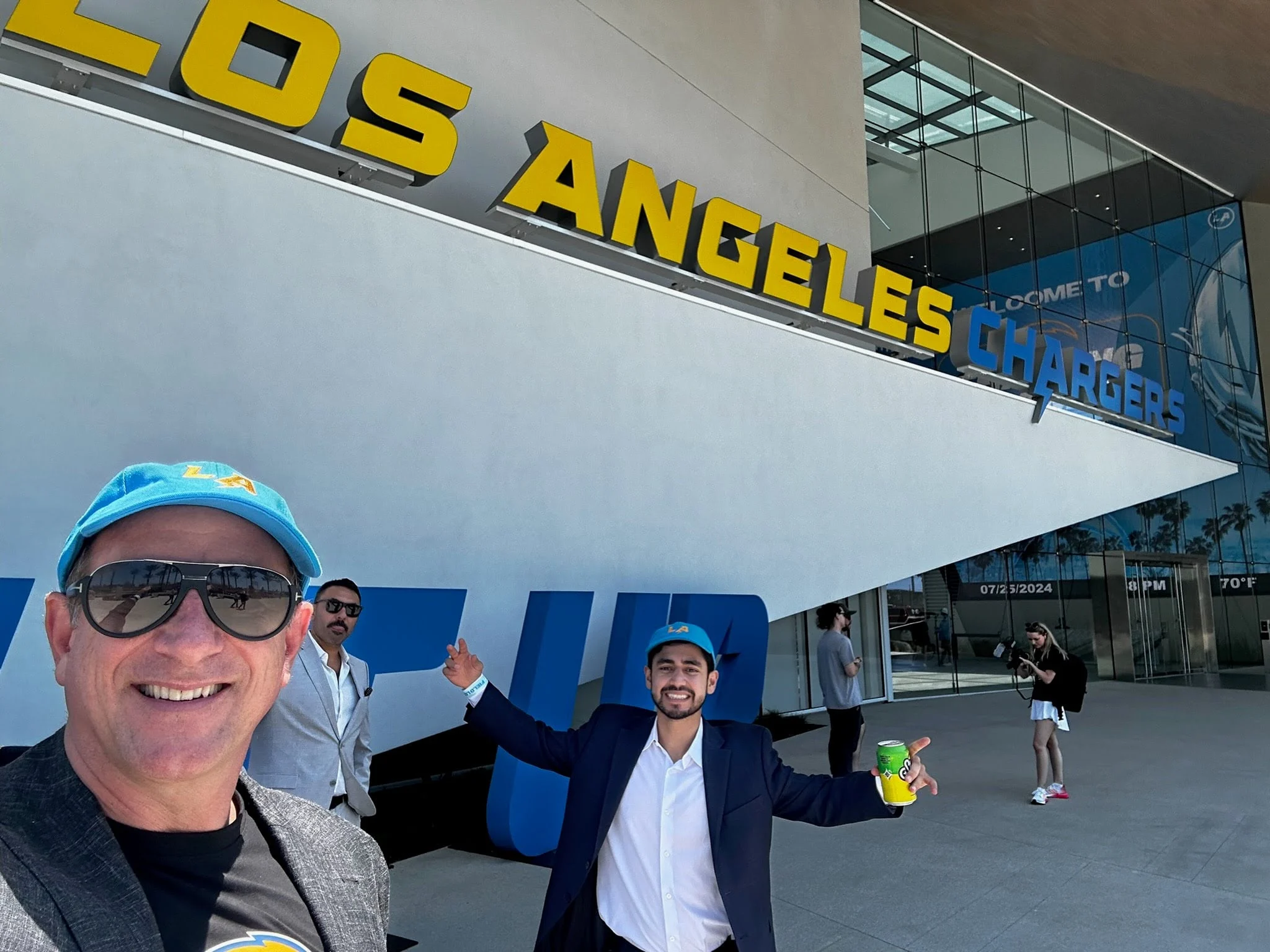
The area's professional sports presence continues to evolve. The Chargers opened their El Segundo headquarters and training facility, The Bolt, in July 2024. The Sparks have announced a new El Segundo practice facility scheduled for 2027. Chargers facility information, Sparks announcement.
The presence of a team is not a count of future home purchases. Some players rent, some buy elsewhere and some keep several homes. For this story, what matters is how a working connection can become a lasting connection to a community.
Displaced Pacific Palisades families are part of this story
Athletes and business people are only part of this story. One significant group deserves more attention: families displaced by the Pacific Palisades fire who have made the South Bay their home.
These families came here because they needed somewhere to live after a devastating disruption. A rental provided a place to begin again. But for some, the South Bay has become more than a temporary address. They have reestablished routines and made this community their home.
That matters when we talk about the next buyer. For a family that has decided to stay, buying here means putting down roots where they have begun rebuilding their lives. This is an important part of the local demand story I am describing, alongside athletes, business people and other renters who decide to become owners.
I don't view displacement as a simple real estate opportunity. Families are making decisions after a major disruption. Their reasons for staying, rebuilding or returning are personal. But when we talk about where demand comes from, we should recognize that a temporary move can lead to a different long-term plan.
Insurance availability and cost are also entering the conversations I hear about moving from other parts of Los Angeles. California's Department of Insurance documented the pressure surrounding the 2025 fires and the protections put in place for affected policyholders. That supports the broader context; it does not prove a particular number of households has relocated to the South Bay. California Department of Insurance.
Nor would I assume that every South Bay property will be easy or inexpensive to insure. That has to be checked for the particular home. A change of neighborhood does not replace the work of obtaining an actual quote.

The expensive lease and the ownership question
I have handled some very substantial rentals. At the upper end, the monthly cost can make a family pause and ask whether it is time to buy. That is a useful question, but the rent payment alone does not answer it.
An unusual short-term rental can also serve a purpose that has little in common with a family's year-long lease. The Rams used a Hermosa Beach home for their 2024 draft operations. That is an example of a specialized use, not a benchmark for ordinary neighborhood rents. Rams draft-house announcement.
For a prospective homeowner, I want to understand the expected holding period. What happens if the player is traded, the job changes or the family needs to leave? Could they carry the home while deciding what to do, or would they have to sell promptly?
Then there is the full cost: financing, property taxes, insurance, maintenance, repairs and the transaction costs of buying and selling. A down payment also commits capital that could be used elsewhere. Mortgage principal can build equity, but interest and operating expenses are costs, and market values can fall.
Renting provides a place to live and flexibility. Buying provides ownership and, potentially, a longer-term home. Neither choice should be reduced to the idea that rent is wasted or that appreciation will take care of everything.
The downturn belongs in this story too
I remember three athlete clients who bought in 2007 and faced difficult outcomes when they needed to sell in the years that followed. Their professional timelines did not wait for the housing market to recover.
That experience is why I do not tell a buyer that a desirable location makes a short holding period safe. A good house can still be the wrong purchase for someone who may need to sell at the wrong time.
The success stories deserve attention, but so do the outcomes that were painful. The sensible question is not simply whether South Bay real estate has rewarded some longtime owners. It is whether this purchase works for this buyer under more than one possible future.
Rob Blake: a $5 million decision in 1998
Here's a high five for Rob Blake—and for thinking beyond his next hockey contract.
In 1998, at age 28, the LA Kings defenseman bought his double-lot property on the Strand in Manhattan Beach for $5 million. That was a substantial commitment for a young player. It was also the year he signed a new contract with the Kings.
What impresses me is both the property he chose and the patience to keep it. His playing career later took him to the Colorado Avalanche and San Jose Sharks, with a return to the Kings in between. As I recall it, he held onto his Manhattan Beach home through those moves and kept a place to come back to.
For perspective, my current market estimate for a single Manhattan Beach Strand lot in a good location is close to $13 million for the land alone, with no structure on it. That is my estimate as of September 2026; frontage, location and the individual parcel still matter. I am not assigning a value to Rob's entire property or simply doubling a per-lot figure to appraise it.
But that comparison helps explain why I see his purchase and long ownership as such a smart financial decision. He recognized an exceptional piece of waterfront real estate while he was still a young player, then gave that decision decades to work. In my view, the land's appreciation is a powerful part of the story.
I don't know how the home fits into his private retirement planning. What I do know is that choosing well and holding a scarce asset over a long period can contribute meaningfully to life after a playing career. So, high five, Rob. The foresight to buy it—and the discipline to keep it—deserve credit. That's the kind of long-term thinking that intelligent buyers bring to this market.
A closed sale is evidence, not a ceiling
In my own work, I have been involved in a $25.5 million Strand transaction involving two lots. I am treating that here as a transaction example, not claiming a current market record. A reported $25 million purchase by Luka Dončić in Manhattan Beach provides another high-end reference point. SportStar Relocation's September 2025 account.
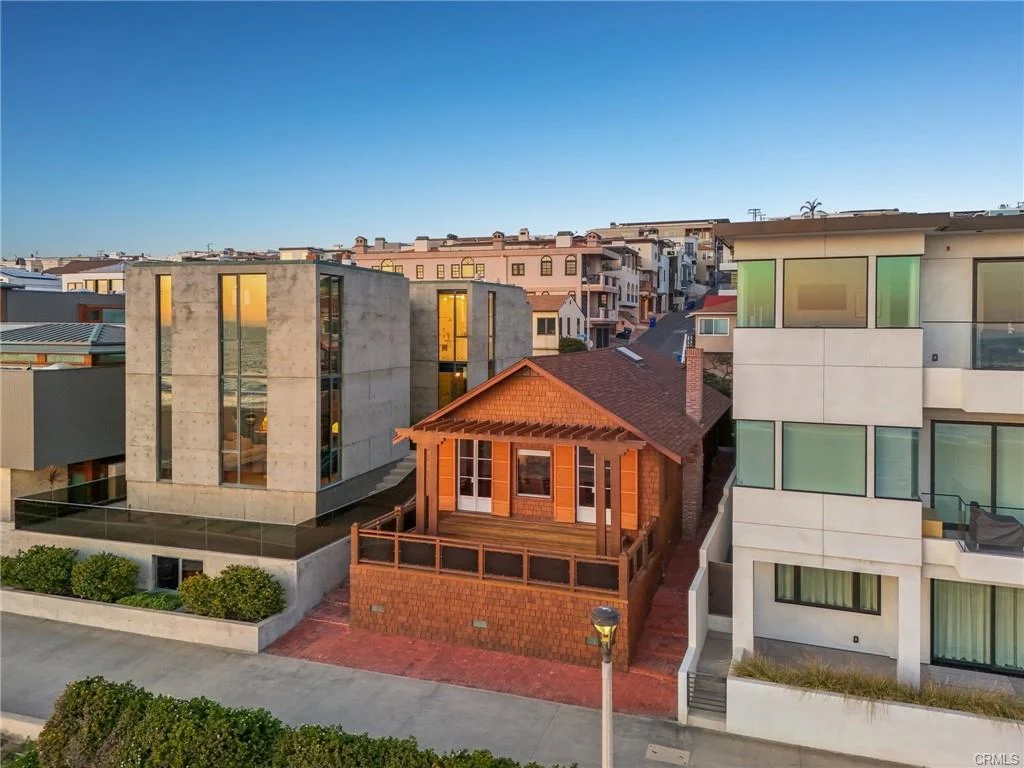
Neither number establishes the maximum value of every home in Manhattan Beach or Hermosa Beach. A property that has never sold will not appear as a recent comparable sale. In my opinion, some substantial homes could command more than the transactions people know about—but an opinion about potential value is not a closed sale or an appraisal.
That distinction matters in both directions. Buyers should not automatically dismiss an exceptional property because there is no identical recent sale. Sellers should not assume that a lack of comparable sales validates whatever price they choose.
The work is to examine the available evidence, the differences between the properties, the alternatives a buyer can actually purchase and the uncertainty that remains. Scarcity makes that analysis more demanding. It does not make analysis unnecessary.
Why I pay attention to the northwest Hill Section
Suppose your wish list includes an ocean view, a substantial home, a lot with room for a pool and the ability to walk to downtown Manhattan Beach. You want to see the water, reach the beach, walk to restaurants and shops, and still have room around the house.
The northwest part of the Hill Section is one of the places I would focus on. In my view, that combination makes it one of the South Bay's most compelling locations for a buyer with those priorities.
This is not a promise that every home there delivers the entire list. An ocean view needs to be assessed from the rooms you will use. A walk should be tried, including the hills. A lot that looks large needs to be evaluated for usable space, setbacks and whether a pool is actually feasible.
What makes the search difficult is finding the combination. More square footage elsewhere may not replace that location. A beach-close home may not provide the yard. A large lot may ask you to give up the walk to dinner.
When only a few homes satisfy the most important requirements, broad citywide comparisons can miss what the buyer is trying to purchase. That is a reason to get more specific about the property, not a reason to stop asking questions about its price.
The second-home buyer who already lives here
For some buyers, the South Bay is a second-home destination, much like Aspen or Park City. But there is a local twist: sometimes the person buying that second home already lives right here.
I had a multimillion-dollar listing on the Strand and was waiting for a buyer to arrive. At that price, I figured he would pull up in a Mercedes or a Ferrari.
He showed up on a skateboard.
He already owned a home nearby. He wasn't looking to move out of it. He wanted a second home on the beach.
That is what makes this story interesting to me. A second home doesn't always mean a flight to a mountain town or a long drive out of the city. For this buyer, it meant a different way to enjoy the place where he already lived.
It's also a part of the competition that a newcomer can miss. The person who wants the same Strand home you do may not be relocating to the South Bay. He may be close enough to come over on a skateboard. Hundreds of SpaceX employees who are capable of buying a home already live here and are part of the demand.
Why this matters to Rocket Bay
A SpaceX employee entering the market with new wealth may be competing with an affluent renter who has already decided to stay, an athlete, a business owner, a doctor, a lawyer or a longtime homeowner with substantial equity. Some buyers are relocating. Some are moving within town. Others are looking for an additional home.
Those buyers do not all need the same property. But when their priorities converge on a small group of homes, the competition can be more specific than a headline about the broader housing market suggests.
There is a difficult side to that demand. Families whose children grew up here can find that the next generation cannot afford to buy nearby. I hear that frustration, and it should not disappear from a conversation about the strength of the market.
Nationally, the National Association of REALTORS' 2025 buyer survey put the median first-time buyer age at 40 and the first-time buyer share at 21%. Those figures describe surveyed purchases from July 2024 through June 2025, not a South Bay conversion rate. They are a reminder that substantial purchasing power in one part of a market can exist alongside real barriers to entry. NAR's 2025 report announcement.
Multiple sources of demand can support a market. They cannot guarantee appreciation or protect every owner from a loss. They also do not remove the need to compare a particular home with the actual alternatives.
For the buyer, I come back to three questions: Does the home fit the life you want? Does the ownership plan survive an unexpected change? And do you understand who else may want the same property?
The next person competing with you may already live around the corner. Their name is simply still on a lease.
Welcome to Rocket Bay.
Navigating a liquidity event?
If SpaceX stock, a company sale or another windfall has changed what is possible for you, the next few decisions matter more than the purchase price. Kaminsky Real Estate Group works with South Bay buyers navigating equity, taxes, timing and off-market opportunities every day.
Schedule a private strategy session →

Ed Kaminsky Kaminsky Real Estate Group · eXp Luxury
#1 Real Estate Agent in the South Bay · Top 15 in the Nation (RealTrends) · Over $4 Billion Sold